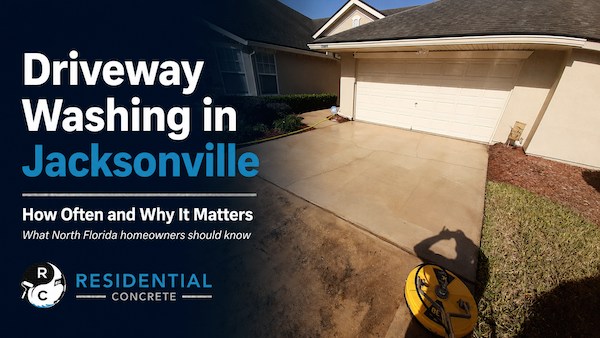
Driveway Washing in Jacksonville: How Often and Why It Matters
Published August 27, 2026
Most homeowners don't think about their driveway until someone points it out. A neighbor mentions the dark streaks running down from the garage. A buyer's agent snaps a photo for listing photos and the stains show up worse than expected. By the time a driveway looks noticeably dirty, it has usually been building up for a year or more, and in Jacksonville's climate that buildup happens faster than most people expect. Regular washing isn't cosmetic upkeep. It protects the concrete underneath and keeps small problems from turning into expensive ones.
What Driveway Washing Actually Does
Driveway washing removes the layer of dirt, algae, mildew, oil residue, and organic debris that settles into concrete's surface texture over time. It's a low-pressure or soft-wash cleaning process, not just a quick rinse with a garden hose, and it's the difference between a driveway that looks maintained and one that doesn't.
Concrete is porous. Whatever lands on it, pollen, tire rubber, sap, tannins from oak leaves, works its way into the surface rather than sitting on top. A hose and a stiff broom will move surface dirt around, but they won't touch what's already soaked in. Professional driveway washing uses the right pressure and cleaning solution to lift that embedded grime without eroding or etching the concrete, which is the mistake a lot of DIY pressure washing jobs make. Too much pressure at the wrong angle can strip the surface and leave permanent light patches that are harder to fix than the stain was to begin with.
Why It Happens Here
Jacksonville's humidity, rainfall, and tree cover create ideal growing conditions for algae, mold, and mildew on exterior concrete, and sandy soil kicks up fine grit that grinds into the surface with every car that pulls in or out of the garage.
Northeast Florida stays humid for most of the year, and driveways rarely get a real chance to dry out completely between rain events, especially in shaded areas under oak canopies or near fences. That constant moisture is exactly what algae and mildew need to take hold. Add in Jacksonville's sandy soil, which gets tracked onto the concrete by tires and foot traffic, and you get a fine abrasive grit sitting in the surface pores. Every time a car pulls in or out, that grit works like sandpaper. Homes in Mandarin and San Marco with heavy oak coverage tend to see the darkest staining first, usually starting at the base of the tree line and spreading toward the garage. Coastal proximity adds another layer: salt air in Jacksonville Beach and Atlantic Beach speeds up staining and can interact with certain sealers if the surface isn't cleaned before resealing.
What It Does / Why It Matters
A dirty driveway isn't just an appearance issue. Algae and mildew buildup makes the surface slick and genuinely dangerous when wet, and left untreated, staining sets in permanently and shortens the life of any existing sealer, adding cost down the road.
Slip risk is the most immediate concern. Algae films on concrete get slippery fast, especially right after rain, and that's a real liability for a family with kids, older parents visiting, or a dog running through the yard. From a value standpoint, a stained driveway is one of the first things a buyer or appraiser notices, and it signals deferred maintenance even if the concrete itself is structurally sound. Cost matters too. Concrete is durable when it's maintained, but the wear that Florida conditions cause doesn't happen because concrete is fragile. It happens because staining and grime are left to sit for years instead of being addressed on a normal cleaning cycle. A driveway that's washed regularly and kept up with concrete sealing holds its finish longer, which means fewer resealing cycles and fewer dollars spent over the life of the surface.
How Maintenance Helps
Washing a driveway once or twice a year keeps stains from setting permanently and helps any existing sealer last closer to the full 3-5+ years instead of wearing out early, which saves money on resealing and resurfacing over time.
The math is straightforward. A routine cleaning costs far less than resurfacing a stained, pitted driveway, and resurfacing costs far less than a full concrete replacement. Homeowners who call after years of neglect are almost always looking at a bigger job than the one they would have had if they'd scheduled a wash two or three years earlier. On calls where the driveway has gone untouched for five-plus years, it's common to find the sealer completely worn through in the tire path, with the surrounding concrete still holding a faint sheen. That uneven wear pattern is a good visual cue that a wash and reseal would have paid for itself several times over. For driveways with paver sections or a mixed concrete-and-paver layout, periodic paver sealing helps in the same way, protecting joint sand and color from the same humidity and grit that affects poured concrete.
Signs to Watch For
Green or black streaking near the garage, a slick feel underfoot when the surface is wet, and dark staining that doesn't lift with a hose are the clearest signs a driveway is overdue for professional washing and possibly resealing.
Look closely at the areas that get the least sun, along fence lines, under overhangs, near landscaping beds. Those spots usually show algae first because they stay damp longest. Tire tracks that look darker than the surrounding concrete are often oil and grime that's worked into the pores rather than sitting on the surface. A chalky, faded look where the sealer used to look glossy is a sign the sealer is breaking down and the concrete underneath is more exposed than it should be. If a light rinse with the hose doesn't noticeably lighten the stains, that's usually the point where a homeowner should stop trying to handle it with a garden hose and call in a proper cleaning.
Frequently Asked Questions
Most driveways in this area benefit from washing once or twice a year. Homes with heavy tree cover, shaded sections, or nearby pools may need it closer to twice a year to stay ahead of algae and mildew growth.
Professional soft washing and low-pressure cleaning are calibrated to remove dirt and organic growth without stripping a properly applied sealer. DIY pressure washing at the wrong setting is where damage typically happens.
Fresh oil stains often lift significantly with the right cleaning solution and technique. Older, deeply set stains may lighten but not fully disappear, and in those cases sealing afterward helps prevent further absorption.
Yes. Sealer applied over dirt, algae, or grime traps that debris underneath and shortens the sealer's effective life. A clean, dry surface is necessary for sealer to bond and last the full 3-5+ years.
It's one of the more affordable ways to improve curb appeal before a sale. A clean driveway signals a well-maintained property, while visible staining tends to prompt buyers or inspectors to ask more questions than the concrete itself may warrant.
Ready for a Cleaner, Safer Driveway?
A driveway that looks tired usually isn't a concrete problem, it's a maintenance gap that's easy to close. Residential Concrete offers free inspections and estimates for driveway washing throughout Jacksonville and the surrounding area, from Orange Park to Ponte Vedra. Call 904-364-7153 to schedule, or use the Contact Us button below to request a free evaluation.
Contact Us