How to Fix Sunken Concrete Pool Decks and Cracking Coping in Orange Park: Pool Deck Repair Orange Park FL
In Orange Park, pool decks work hard through heat, storms, and soil movement. If you are seeing cracks, hollow spots along the coping, or slabs that have sunk and tilted, targeted pool deck repair can restore safe footing and protect your pool edge before the damage spreads. This guide explains how a pro reads concrete cracks around a pool and how we match deep patching, structural stitching, or localized leveling to the problem so you know what to expect.
Why Pool Decks Sink and Crack Around the St. Johns River
Orange Park sits on the west side of the St. Johns River basin where heavy clay layers mix with sandy pockets. Clay swells when wet and shrinks when dry. Those seasonal moisture swings, plus splash-out and irrigation, cause the ground to move under a deck. Over time, slabs can settle toward drain lines, screen enclosures, or the pool shell. Neighborhoods near Doctors Lake and along Kingsley Avenue often see this slow, uneven movement after a rainy stretch followed by a hot, dry spell.
When soil shifts, joints open, corners curl, and hairline cracks become wider. Add in pool chemicals and UV, and small flaws become trip hazards or coping separations. The goal is to stop the cause and stabilize the surface before it becomes a safety issue.
Local insight: After summer downpours and king tides, our water table can jump for days. That extra moisture under clay-rich soils increases slab movement and vapor drive. Scheduling repair and coating work during a stable, dry window helps longevity.
How Pros Read a Crack: Deep Patching, Stitching, or Leveling
Every repair starts with diagnosis. A trained concrete technician studies where the crack runs, how wide it is, and what the edges are doing. Here is how that evaluation points to the right fix around a pool:
- If a crack is tight, mostly hairline, and follows a control joint with no height difference, it often needs routing and deep patching to lock out water and blend the texture.
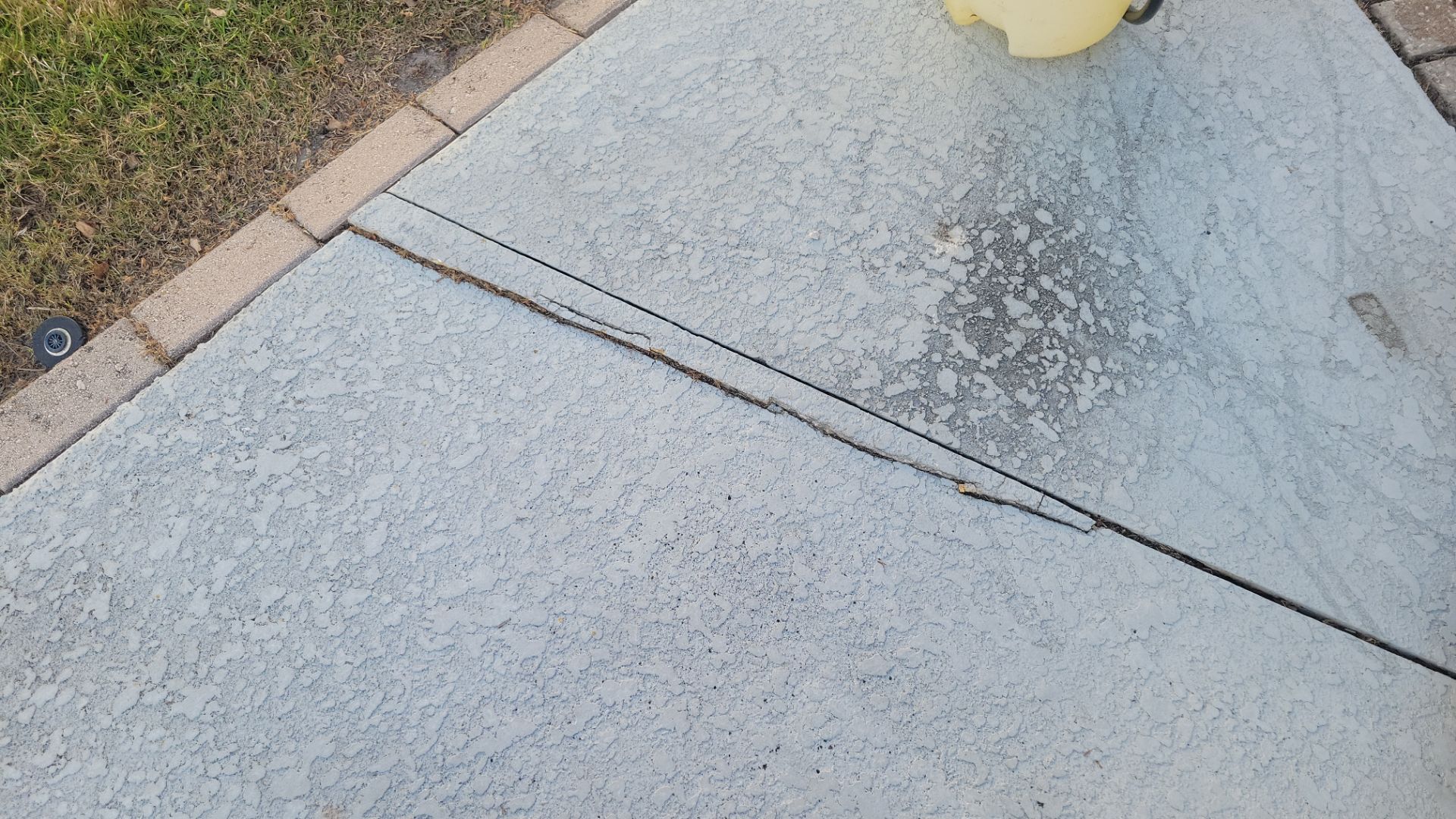
- If the crack crosses the deck in a straight line, keeps widening, or shows a clear step between sides, a structural “stitch” is typically added across the crack before patching to resist future opening.
- If one slab panel has sunk or tilted, the priority is leveling that panel so patching is not fighting ongoing movement. Once level, the surface can be repaired and blended.
Important: Cracks that keep collecting water, or that run toward the coping with a step edge, will not stabilize with surface patch alone. They need stitching or leveling first so the repair lasts.
Technical Signs Your Pool Surround Can Be Saved Without Demolition
Many Orange Park pool decks with settlement or cracking are good candidates for focused repairs. Full tear-out is rarely the first answer. Look for these field indicators that point to a repairable surface:
- Total movement under about 1 inch across a panel, with room to re-establish slope away from the pool
- Sound concrete around the damaged zone when tapped, without widespread delamination or soft, punky areas
- Cracks that can be bridged by stitches or dowels at regular spacing, with firm edges that are not crumbling
- Localized spalls or pits that accept a compatible repair mortar and feather well into the surrounding texture
- Copings that have lifted or loosened in short runs, where resetting and re-bonding can bring the joint back
Good rule of thumb: If a few panels are affected but most of the deck still sounds solid, specialized patching, stitching, and leveling typically restore safety and appearance without starting over.
Coping Separation and Hollow Edges: What a Pro Checks
Coping and deck must move independently. When soil shrinks or swells, the deck can pull away from the coping. A technician checks for hollow sounds at the back of the coping, loosened sections along curves, and missing or split expansion material. If the coping is intact but separated, a careful reset and joint rebuild protect the pool edge. If the coping is cracked through or rocking, expect targeted removal and reset in short sections, followed by deck crack stabilization so movement does not return.
Localized Leveling Methods for Sunken Slabs in Clay Soil
Leveling brings a settled panel back to plane so patching holds and joints align. In our area, pros commonly use modern injection techniques to lift and support the slab at key points, then confirm drainage pitch away from the waterline. The choice of grout or foam, lift points, and volume depends on soil conditions, slab thickness, and nearby plumbing. The objective is simple: restore safe transitions with minimal disturbance, then lock the repair in place with joint rebuild and compatible sealing.
After leveling, a detailed surface blend hides lift holes and patch seams so the deck looks consistent. Where cracks were active, adding stitches before finishing helps keep them closed through the next wet-dry cycle.
Deep Patching and Structural Stitching That Last
Deep patching is not a skim coat. Around pools, a pro cuts a controlled channel, cleans it, and packs a repair mortar that bonds to sound concrete and resists constant moisture. For active or wide cracks, stitches span across the plane change so the repair does not re-open. Think of stitching like seatbelts across the crack: they help the surface move as one unit during soil shifts common to Jacksonville’s clay zones.
Once the structure is stable, a texture blend and color match keep patches from standing out. If previous coatings have peeled, it is worth learning why that happened before finishing. This client article on why acrylic overlays peel explains how trapped moisture and heat can pop tight films in our climate, and why breathable systems are chosen after repairs.
When Crack Patching Alone Is the Right Move
Not every crack is a structural warning sign. Short, non-propagating cracks that stay tight through seasonal shifts often need routing, filling, and a careful texture feather. Joint cleanout is added where edges chip from cart wheels or furniture. For that kind of focused repair, see our pool deck crack patching service to understand how a small fix prevents a larger trip hazard later.
Repair Sequence That Fits Northeast Florida Weather
Repair plans in Orange Park tie into weather and water. A typical sequence looks like this: stabilize movement first, rebuild joints, perform deep patching and stitches, then blend texture and protect with a compatible finish. That order keeps moisture out and preserves traction. If your deck has heavy algae history from shade or screen enclosure drip lines, a scheduled washing and reseal cycle after repairs helps the surface last longer and look even across seasons.
Orange Park Neighborhood Notes and Seasonal Timing
Homes near Doctors Lake, Bellair, and along the St. Johns River see wider swings in slab moisture than inland areas. Spring irrigation, summer storms, and fall dry-down each tug on clay soils in different ways. Timing work between long wet spells reduces reactivation of settlement during cure. If you host summer gatherings, plan inspections early so your project can be sequenced around pool use.
How Residential Concrete Evaluates Your Deck
With Residential Concrete, you get a clear, field-tested process. We map cracks and measure height changes, probe for hollow areas, and note drainage. Then we explain which areas need leveling, which need structural stitches, and which are good candidates for deep patch-and-blend. If parts of your deck are too far gone for spot work, we explain why and outline resurfacing or coping reset options so you can compare paths without pressure or guesswork.
For homeowners researching pool deck repair Orange Park FL, remember that the right plan is specific to your slab, soils, and exposure. A simple, written scope helps you see what is urgent versus cosmetic so you can stage work in smart steps.
Safety and Appearance: Small Details That Make a Big Difference
Little choices add up around a pool. Non-slip blends near steps, skimmer corners, and tanning ledges keep bare feet confident. Consistent joint spacing limits edge chipping along furniture paths. Drain channels that actually move water reduce algae lines and keep sealers from getting stressed. These are the finishing touches that protect your investment and help the repair disappear into the deck.
Do not ignore trip edges that catch toes or wheels. Even small height differences can cause injuries when wet. Stabilize first, then blend the surface so transitions feel natural.
Ready to Make Your Pool Surround Safe Again?
If you see sinking panels, widening cracks, or coping separation, now is the time to act. Our technicians will assess your Orange Park pool deck, explain what is happening under the surface, and match the fix to the cause. Get started with targeted pool deck repair that addresses Jacksonville clay soil slab sinking and restores safe, even walkways. Call 904-364-7153 to schedule your on-site evaluation with Residential Concrete, or use our service page for quick booking.